SSL Certificates – Complete Guide to Website Security in 2026
In today’s digital world, website security has become more important than ever. Whether you run a personal blog, an eCommerce store, or a business website, protecting user data is essential. One of the most effective ways to secure a website is by using an SSL Certificate.
SSL certificates help encrypt sensitive information, improve website trust, and enhance search engine rankings. Modern internet users expect websites to be secure, and browsers now warn visitors when a site does not use HTTPS security.
This article explains everything about SSL certificates, their importance, types, benefits, and why every website should use them in 2026.
What is an SSL Certificate?
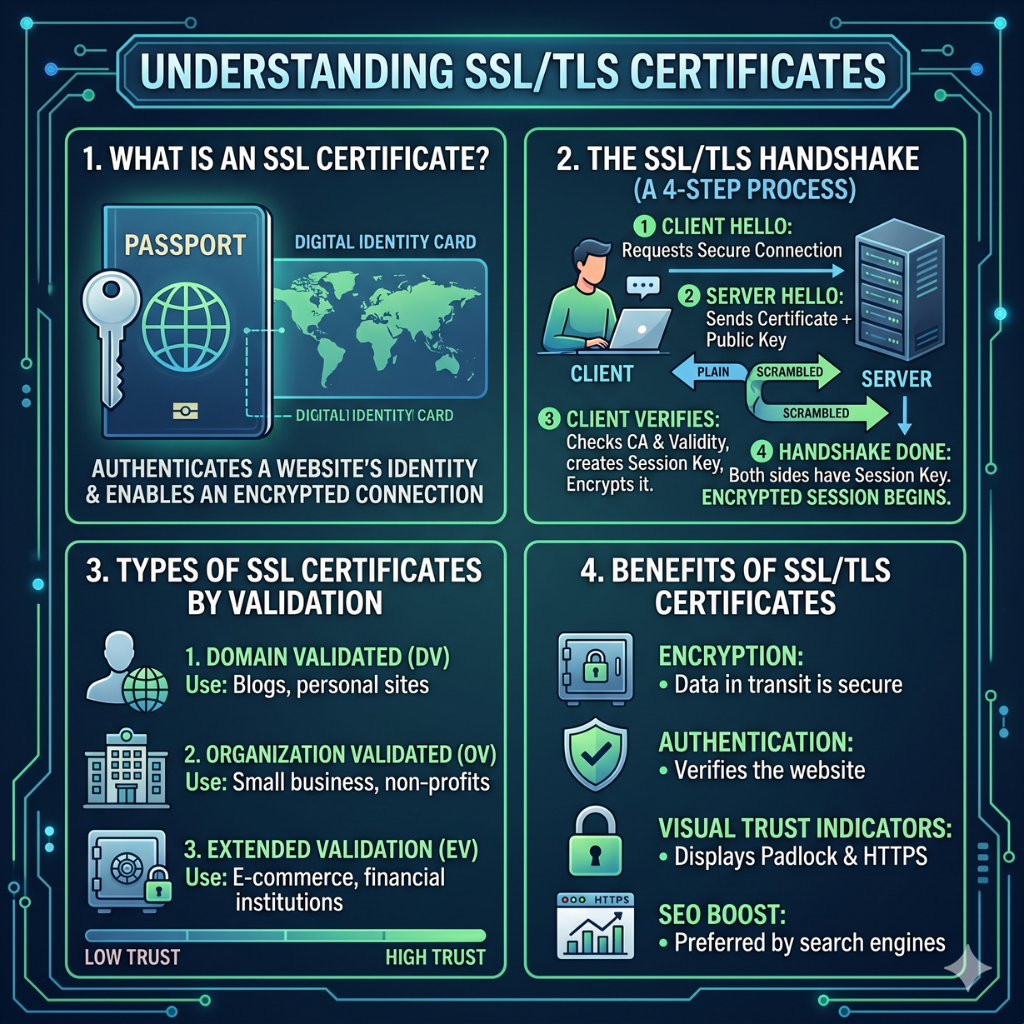
An SSL (Secure Sockets Layer) certificate is a digital security certificate that encrypts the communication between a website and its visitors. It ensures that sensitive information such as passwords, payment details, login credentials, and personal data remains protected from hackers and cyber threats.
When a website has an SSL certificate installed, the website URL changes from:
HTTP → HTTPS
You also see a padlock icon in the browser address bar, indicating that the website is secure.
SSL certificates use encryption technology to create a secure connection between the web server and the user’s browser.
Why SSL Certificates are Important
Website security is no longer optional. Search engines, browsers, and users all expect websites to be secure.
Here are some key reasons why SSL certificates are important:
1. Data Encryption
SSL certificates encrypt the data exchanged between users and websites. This prevents hackers from stealing sensitive information.
2. Website Trust and Credibility
Visitors trust websites that display the HTTPS padlock icon. It gives users confidence that their information is safe.
3. Better SEO Rankings
Search engines like Google consider HTTPS as a ranking factor. Websites with SSL certificates often perform better in search engine rankings.
4. Secure Online Payments
ECommerce websites require SSL certificates to securely process online transactions and payment information.
5. Browser Security Warnings
Modern browsers warn users when websites are not secure. Without SSL, visitors may leave your site immediately.
How SSL Certificates Work
SSL certificates work by encrypting data during transmission. When a user visits a secure website, the browser and server establish a secure encrypted connection using cryptographic keys.
The process includes:
- Browser connects to the secure website
- SSL certificate verification takes place
- Secure encrypted connection is established
- Data transfer begins safely
This process ensures that no third party can intercept sensitive information.
Types of SSL Certificates
Different websites require different levels of security. Here are the most common types of SSL certificates:
1. Domain Validated (DV) SSL
DV SSL certificates are basic security certificates that verify domain ownership. They are suitable for blogs, small websites, and personal sites.
2. Organization Validated (OV) SSL
OV SSL certificates provide additional business verification and are ideal for company websites and organizations.
3. Extended Validation (EV) SSL
EV SSL certificates offer the highest level of trust and verification. They are commonly used by banks, eCommerce websites, and large enterprises.
4. Wildcard SSL Certificates
Wildcard SSL certificates secure a main domain and all its subdomains under a single certificate.
Example:
- example.com
- blog.example.com
- shop.example.com
5. Multi-Domain SSL Certificates
These certificates protect multiple domains using one SSL certificate.
Benefits of SSL Certificates
Enhanced Security
SSL encryption protects websites against hacking attempts, phishing attacks, and data theft.
Improved Customer Trust
Customers are more likely to interact with websites that appear secure and trustworthy.
Higher Conversion Rates
Secure websites improve customer confidence, which can increase sales and lead generation.
Regulatory Compliance
Many online businesses must comply with security standards and data protection regulations that require SSL certificates.
Protection Against Cyber Threats
SSL certificates help reduce risks related to cyberattacks and unauthorized data access.
SSL Certificates and SEO
Website security directly impacts SEO performance. Search engines prioritize secure websites because they provide a safer browsing experience.
Benefits for SEO include:
- Better search engine rankings
- Improved website trust signals
- Lower bounce rates
- Enhanced user experience
- Increased organic traffic
HTTPS websites are generally preferred over unsecured HTTP websites.
Free vs Paid SSL Certificates
There are both free and paid SSL certificate options available.
Free SSL Certificates
Free SSL certificates, such as those offered by Let's Encrypt, provide basic encryption and are suitable for small websites and blogs.
Paid SSL Certificates
Paid SSL certificates offer advanced features such as:
- Higher validation levels
- Warranty protection
- Business verification
- Better customer trust
- Advanced support
Businesses and eCommerce websites often prefer paid SSL certificates for enhanced credibility.
Common SSL Certificate Errors
Sometimes websites may face SSL-related issues, including:
- Expired SSL certificates
- Incorrect installation
- Mixed content errors
- Domain mismatch problems
- Untrusted certificate authority
Regular monitoring and timely renewal help avoid these problems.
How to Choose the Right SSL Certificate
Choosing the right SSL certificate depends on your website type and business needs.
Consider these factors:
- Website size
- Number of domains
- Type of business
- Security requirements
- Budget
- Customer trust needs
For small websites, DV SSL may be enough, while large businesses may require EV SSL certificates.
Future of Website Security
As cyber threats continue to grow, website security will become even more important in the future. Technologies such as AI-powered security systems, stronger encryption methods, and advanced authentication mechanisms will improve online safety.
SSL certificates will continue to play a major role in protecting websites and maintaining user trust.
Businesses that prioritize security will have a stronger online reputation and better customer confidence.
Conclusion
An SSL Certificate is one of the most essential security tools for modern websites. It protects sensitive information, improves trust, enhances SEO performance, and ensures safe online communication.
Whether you run a personal website, business platform, or online store, using an SSL certificate is critical for maintaining security and professionalism in 2026. Secure websites not only protect users but also build long-term credibility and online success.
FAQs
1. What is an SSL certificate?
An SSL certificate is a digital security certificate that encrypts communication between a website and its visitors.
2. Why is SSL important for websites?
SSL protects sensitive data, improves website trust, enhances SEO rankings, and secures online transactions.
3. What does HTTPS mean?
HTTPS stands for HyperText Transfer Protocol Secure. It indicates that a website uses SSL encryption.
4. Are free SSL certificates safe?
Yes, free SSL certificates provide secure encryption and are suitable for many websites, especially blogs and small sites.
5. How often should SSL certificates be renewed?
Most SSL certificates need renewal every year, although some providers offer longer-term or auto-renewal options.
Powered by WHMCompleteSolution