CloudLinux License – Complete Guide for Web Hosting in 2026
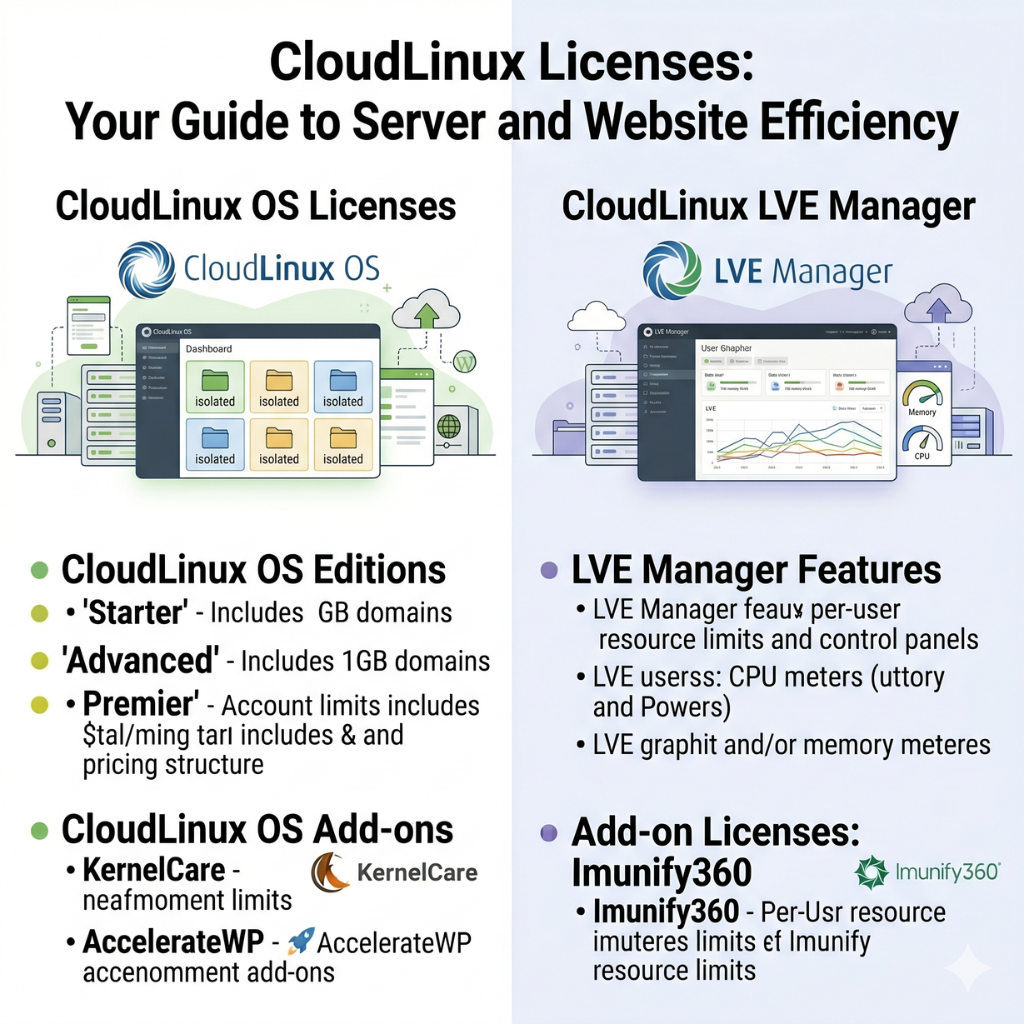
In the modern web hosting industry, performance, stability, and security are critical factors for success. One solution that has become essential for hosting providers is CloudLinux OS. Designed specifically for shared hosting environments, CloudLinux helps isolate users, manage resources efficiently, and improve overall server reliability. Understanding CloudLinux licensing is crucial for anyone running or planning to start a hosting business.
What is CloudLinux?
CloudLinux is a specialized operating system built on the Linux kernel, tailored for web hosting providers. It enhances traditional Linux servers by adding features that prevent one user from affecting others on the same server.
This is achieved through its key technology called Lightweight Virtual Environment (LVE), which isolates each hosting account and allocates specific resources like CPU, RAM, and disk I/O.
Key Features of CloudLinux
CloudLinux offers a wide range of features that make it a preferred choice for hosting companies:
1. LVE (Lightweight Virtual Environment)
LVE allows hosting providers to limit and control resource usage per account. This ensures that no single website can overload the server.
2. CageFS (Secure File System)
CageFS isolates each user in a virtualized file system, preventing unauthorized access to other users’ data and enhancing server security.
3. MySQL Governor
This feature monitors and limits database usage, preventing slow queries from affecting server performance.
4. PHP Selector
Users can choose different PHP versions based on their application requirements, making it highly flexible.
5. Enhanced Security
CloudLinux provides kernel-level security, protecting servers from common vulnerabilities and attacks.
What is a CloudLinux License?
A CloudLinux license is required to use the CloudLinux OS on your server. It is typically billed monthly and is tied to your server’s IP address.
Unlike traditional Linux distributions, CloudLinux is a commercial product, meaning you need a valid license to access updates, support, and premium features.
Types of CloudLinux Licenses
CloudLinux offers flexible licensing options depending on your server environment:
1. Dedicated Server License
Ideal for physical servers used by hosting providers. This license supports high performance and large numbers of hosting accounts.
2. VPS License
Designed for virtual private servers. It is more affordable and suitable for smaller hosting setups or resellers.
3. Cloud License
Used in cloud environments such as AWS, Google Cloud, or other virtualized infrastructures.
4. Trial License
CloudLinux offers a free trial (usually 30 days) for users who want to test the platform before purchasing.
Benefits of Using CloudLinux License
1. Improved Server Stability
CloudLinux prevents “noisy neighbors” from consuming excessive resources, ensuring consistent performance for all users.
2. Better Security
With CageFS and kernel-level protections, CloudLinux significantly reduces the risk of cross-account attacks.
3. Resource Management
Hosting providers can allocate CPU, RAM, and disk usage limits, improving efficiency and uptime.
4. Increased Customer Satisfaction
Stable and secure hosting environments lead to fewer complaints and better retention rates.
5. Compatibility with Control Panels
CloudLinux integrates seamlessly with popular panels like cPanel, Plesk, and DirectAdmin.
CloudLinux vs Standard Linux
Here’s how CloudLinux differs from standard Linux distributions like CentOS or AlmaLinux:
- Resource Isolation:
CloudLinux isolates users; standard Linux does not. - Security:
CloudLinux provides advanced protection; standard Linux relies on manual configuration. - Performance Stability:
CloudLinux ensures balanced resource usage; standard Linux may face spikes. - Hosting Optimization:
CloudLinux is built for hosting; standard Linux is general-purpose.
CloudLinux Pricing Overview
CloudLinux pricing varies depending on the type of license and provider. Generally:
- VPS licenses are more affordable
- Dedicated licenses cost more but offer higher scalability
- Monthly billing is standard
- Discounts may be available for bulk or annual purchases
Prices may also vary based on your hosting provider or reseller.
How to Buy a CloudLinux License
You can purchase CloudLinux licenses through:
- Official CloudLinux website
- Authorized resellers
- Web hosting providers offering bundled services
After purchasing, the license is activated via your server’s IP address, and installation can be completed in minutes.
Who Should Use CloudLinux?
CloudLinux is ideal for:
- Shared hosting providers
- Reseller hosting businesses
- VPS hosting companies
- Web hosting startups
- Agencies managing multiple websites
If you’re running multiple websites on a single server, CloudLinux is almost a necessity.
Best Practices for Using CloudLinux
- Set appropriate LVE limits for each user
- Monitor server performance regularly
- Keep your system updated
- Use CageFS for enhanced security
- Combine with a reliable control panel
FAQs
1. Is CloudLinux necessary for shared hosting?
Yes, it greatly improves stability and security, making it highly recommended for shared hosting environments.
2. Can I use CloudLinux on VPS?
Yes, CloudLinux offers VPS licenses specifically designed for virtual environments.
3. Does CloudLinux support cPanel?
Yes, it integrates seamlessly with cPanel and other control panels.
4. How is CloudLinux different from Ubuntu or CentOS?
CloudLinux is optimized for hosting with resource isolation, while Ubuntu and CentOS are general-purpose operating systems.
5. Is CloudLinux worth the cost?
For hosting providers, the improved performance, security, and customer satisfaction make it a valuable investment.
Conclusion
CloudLinux OS has become a backbone technology for modern web hosting environments. Its ability to isolate users, control resources, and enhance security makes it indispensable for hosting providers.
Investing in a CloudLinux license ensures better server performance, happier customers, and a more reliable hosting infrastructure. Whether you’re running a small VPS or a large hosting business, CloudLinux provides the tools needed to succeed in today’s competitive hosting industry.
Comments (0)
No comments yet. Be the first to comment!
Powered by WHMCompleteSolution















Leave a Comment